
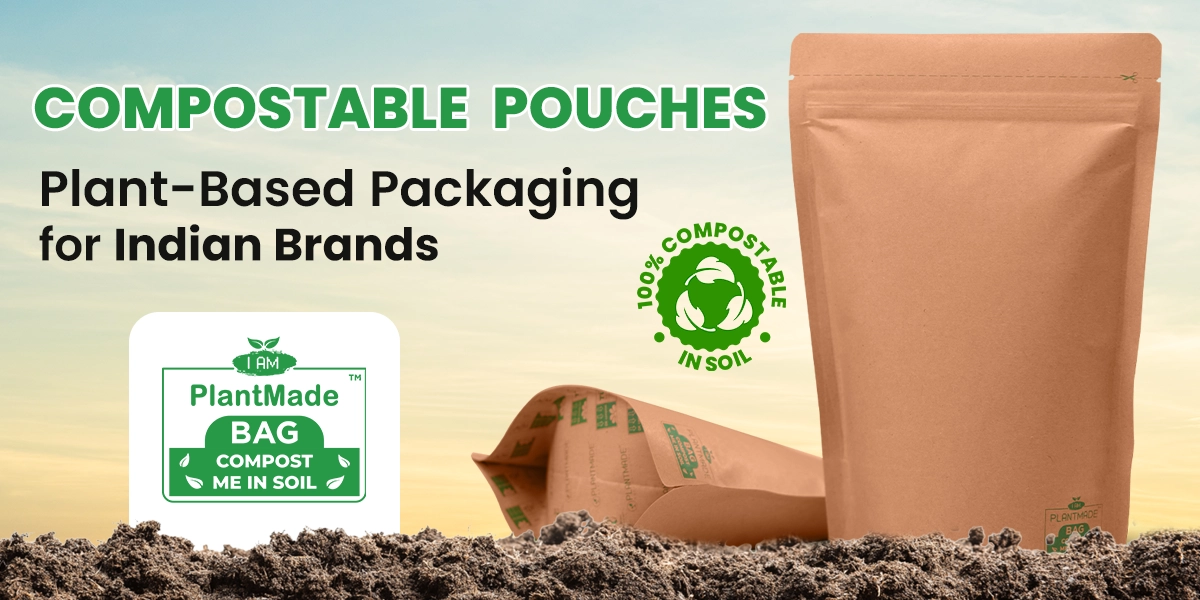
As Indian brands look for alternatives to conventional plastic packaging, compostable pouches are becoming an option for selected food, snack and dry-product applications. Often associated with plant-based or renewable materials, these pouches are designed to break down under specific composting conditions.
But plant-based does not automatically mean compostable. The material structure, product requirements and end-of-life conditions all need to be considered.
What Are Compostable Pouches?
Compostable pouches are flexible packaging structures made with materials designed to break down through composting under defined conditions. Some compostable materials use renewable or plant-derived feedstocks.
The important point is that the complete pouch structure matters. Films, sealant layers, adhesives, inks and other components need to be considered when evaluating compostability.
Key fact: IS/ISO 17088:2021 covers disintegration during composting, ultimate aerobic biodegradation, effects on compost and control of certain constituents. The standard is intended for assessing compostable plastics in industrial composting processes.
Plant-Based Does Not Mean Compostable Anywhere
A pouch made partly from plant-derived material should not automatically be described as compostable. Likewise, a certified compostable pouch should not be assumed to break down in any environment.
In India, compostable plastic materials are required to conform to IS/ISO 17088:2021 under the Plastic Waste Management framework. Current rules also specify that packaging made from compostable plastics should carry the label “compostable only under industrial composting.”
Important : Compostability is about the conditions under which a material is tested and processed. It is not the same as simply being biodegradable in soil, water or general waste.
Where Can Compostable Pouches Be Used?
Compostable pouches can be considered for selected dry foods, snacks, bakery products, seeds and other applications where the required shelf life and barrier performance can be achieved.
They are not suitable for every product. Applications involving significant oil or liquid content, or products requiring extended shelf life, may need a different material structure.
The packaging still needs to protect the product from moisture, oxygen, contamination and other factors throughout storage and transportation.
Packaging first : A compostable material is only useful when it can provide the protection your product actually needs.
Compostable or Recyclable?
Compostable and recyclable packaging follow different end-of-life routes.
Compostable packaging is designed to break down under specified composting conditions, while recyclable packaging is intended to be collected and processed through an appropriate recycling system.
Neither option is automatically suitable for every product. Product protection, shelf life, available waste infrastructure and the actual packaging structure should all be considered before making a choice.
What Should Indian Brands Check?
Before selecting compostable pouches, brands should check:
- Product type and required shelf life
- Moisture and oxygen barrier requirements
- Oil or liquid compatibility
- Pouch format and sealing requirements
- Compostability testing or certification
- Applicable Indian packaging requirements
Most importantly, ask whether the finished pouch structure, rather than only one of its materials, has been evaluated for the intended compostability claim.
Compostable Pouches from Swiss Pac India
Swiss Pac provides flexible packaging solutions, including compostable packaging options for brands exploring alternatives to conventional packaging.
The suitable structure depends on the product and its technical requirements. If you are considering compostable pouches, providing the product type, pouch size, expected shelf life and quantity helps determine whether this packaging option is appropriate.
Compostable packaging can be a useful choice for the right application. The key is to match the material with the product, performance requirements and appropriate end-of-life conditions.