
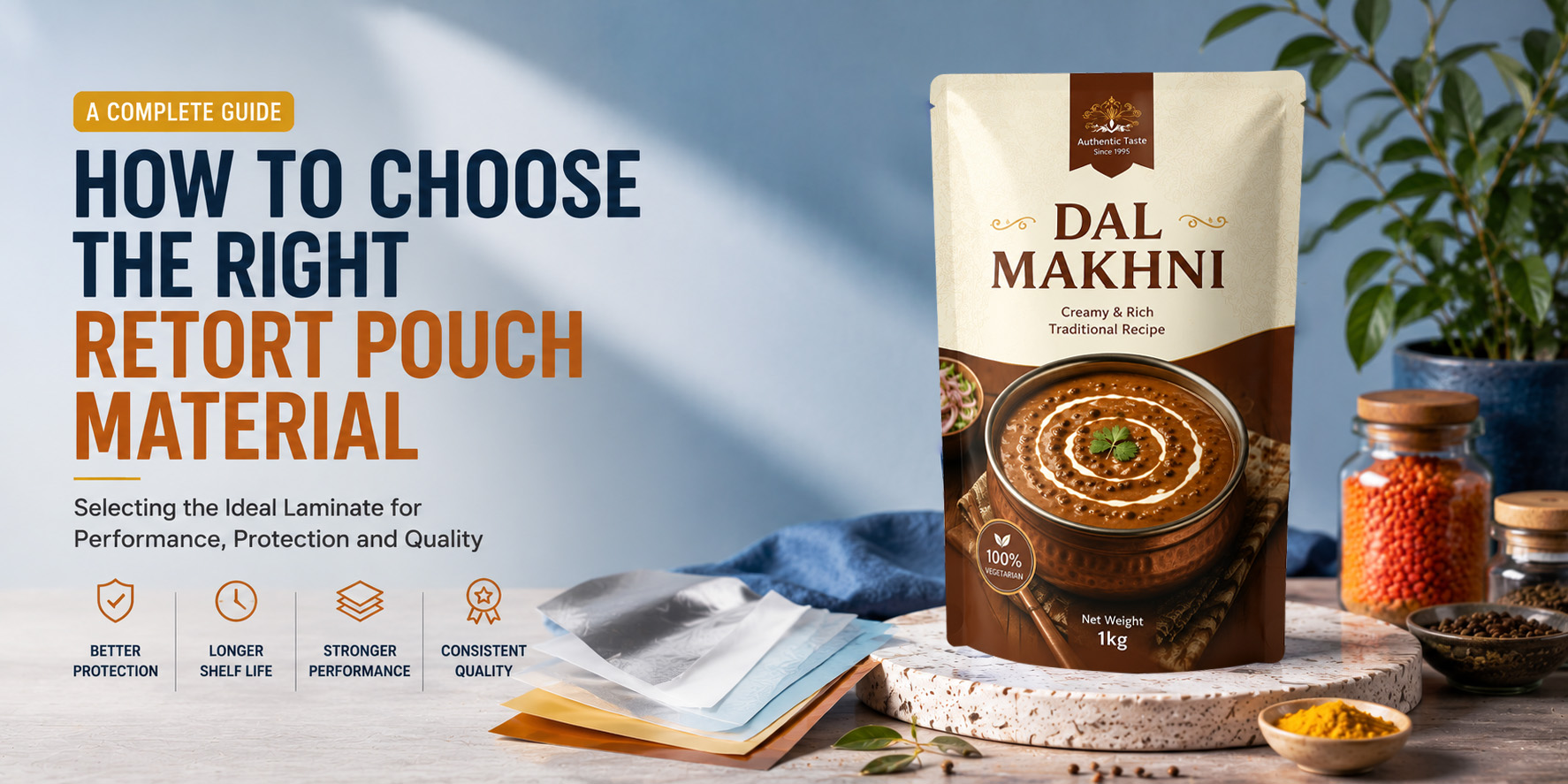
Choosing a retort pouch isn’t as simple as selecting a size or adding your artwork.
Every food product behaves differently during heat processing. A curry, pasta sauce, pet food, and ready-to-eat rice may all be packed in retort pouches, but they often require different packaging structures to perform reliably during sterilisation.
Getting these specifications right from the beginning can help avoid product failures, unnecessary costs, and production delays.
Start with your product, not the packaging
The first question shouldn’t be “Which pouch do I need?”
It should be “What does my product need?”
A product with high oil content behaves differently from a water-based product. Thick sauces place different demands on packaging than soups or beverages. Processing temperature, shelf-life expectations, and storage conditions also influence the type of pouch required.
Understanding the product first makes it much easier to select the right packaging.
The laminate does most of the work
The laminate is often the most important part of a retort pouch.
It protects the product from moisture, oxygen, light, and external contamination while remaining stable during high-temperature sterilisation. Choosing an unsuitable laminate can lead to delamination, reduced barrier performance, or seal failure after processing.
The correct laminate depends on both the product and the retort conditions, which is why material selection should never be based on price alone.
Strong seals are just as important
Even the best laminate cannot compensate for poor sealing.
Retort processing exposes every pouch to heat and pressure. If the seals are weak or inconsistent, the risk of leakage increases significantly.
Professional manufacturers routinely test seal strength as part of quality control to ensure the pouch performs consistently throughout production and distribution.
Think beyond today's production
Many businesses choose packaging based only on their current production requirements.
Instead, think about where your product will be six or twelve months from now.
Will it be exported?
Will shelf life need to increase?
Could production volumes grow?
Planning ahead often helps avoid changing packaging specifications as the business expands.
Final Thoughts
A good retort pouch isn’t defined by its appearance. It’s defined by how well it protects the product throughout filling, sterilisation, transport, storage, and final use.
Choosing the right laminate, ensuring strong seals, and considering your production process from the beginning will help create packaging that performs consistently in the real world, not just during initial trials.
🔗 Suggested Internal Links
References
- Flexible Packaging Association (FPA)
- PMMI – The Association for Packaging and Processing Technologies
- ASTM International – Flexible Packaging Testing Standards