
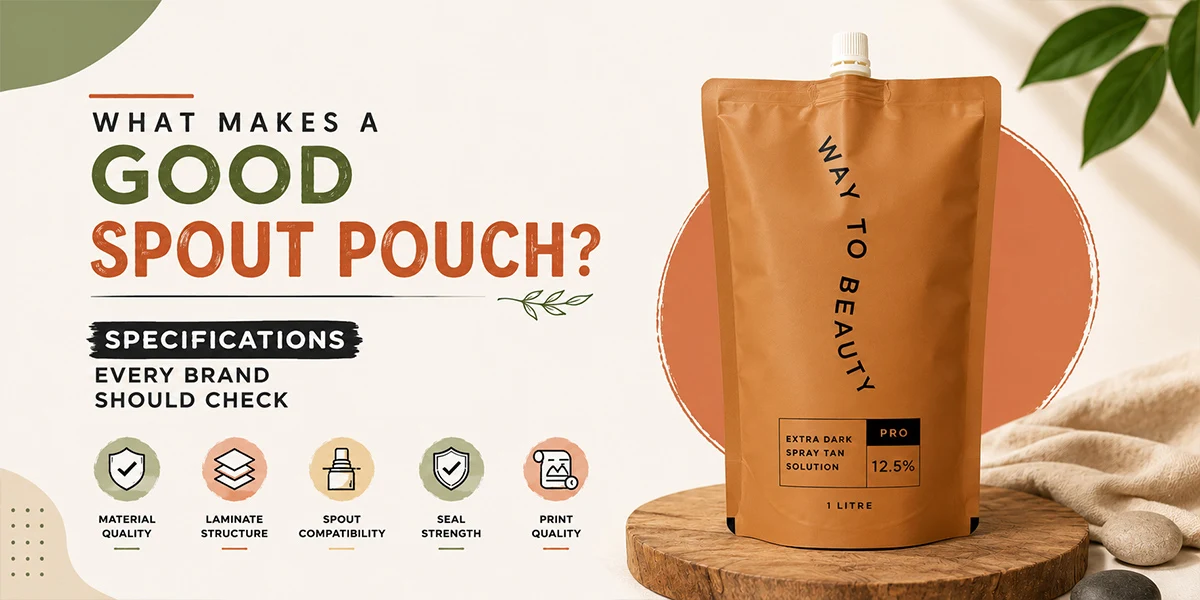
When sourcing spout pouches, many businesses focus on the visible details like size, printing, or finish. While these are important for branding, they don’t determine how well the pouch performs.
A well-designed spout pouch protects your product, runs smoothly on filling lines, prevents leaks, and maintains quality throughout storage and transportation. These results depend on a few technical specifications that are often overlooked during the buying process.
Here are the key areas every brand should understand before placing an order.
1. The Laminate Structure Matters
For example:
- PET/PE is commonly used for products with a shorter shelf life.
- PET/MetPET/PE provides improved light and oxygen protection.
- PET/Aluminium Foil/PE offers the highest barrier for sensitive products such as juices, concentrates, or pharmaceutical liquids.
- Retort laminates are designed for products that require high-temperaturesterilisation.
Choosing the right laminate should always depend on the product inside, not simply the cost of the packaging.
2. Seal Strength Is Just as Important as the Material
Even the best laminate won’t perform if the seals are weak.
Strong and consistent seals help prevent leakage during filling, transport, and handling. Seal
quality can be affected by factors such as sealing temperature, pressure, machine settings,and the cleanliness of the sealing area.
A reliable manufacturer will test seal strength as part of their quality control process rather
than relying only on visual inspection.
3. Don't Ignore the Spout Weld
The spout is attached to the pouch using heat welding. If this weld isn’t strong enough, it
becomes one of the most common causes of leakage.
The weld should remain secure during:
- Filling
- Transportation
- Drop impact
- Repeated opening and closing by the consumer
Proper weld strength testing is especially important for larger pouches or products filled
while warm.
4. Choose the Right Spout and Cap
Not every liquid flows the same way.
A thicker product like honey or shampoo may require a larger spout than drinking water or fruit juice.
The cap also plays an important role by providing a secure seal and preventing
accidental leakage.
Depending on the application, brands can choose from standard screw caps, flip-top caps,tamper-evident closures, or child-resistant options.
Selecting the right combination improves both user experience and product safety.
5. Barrier Properties Affect Shelf Life
One of the main purposes of flexible packaging is to protect the product until it reaches the customer.
Depending on what’s being packed, the pouch may need protection against:
- Oxygen
- Moisture
- UV light
- Aroma loss
Products such as edible oils, beverages, dairy products, and sauces often require higher barrier structures than household cleaning liquids.
Understanding these requirements early helps avoid costly packaging changes later.
Final Thoughts
A good spout pouch is more than attractive printing or the right size. Its performance
depends on the quality of the laminate, reliable sealing, a strong spout weld, the correct cap design, and suitable barrier protection.
Before finalising your packaging, discuss your product type, filling process, storage
conditions, and shelf-life requirements with your packaging supplier. Choosing the right specifications from the beginning can reduce production issues and help ensure your product reaches customers in the same condition it left your facility.
References
- Flexible Packaging Association (FPA)
- PMMI – Packaging Machinery & Processing Technologies
- ASTM International – Flexible Packaging Test Standards
- Smithers – Flexible Packaging Market Reports