
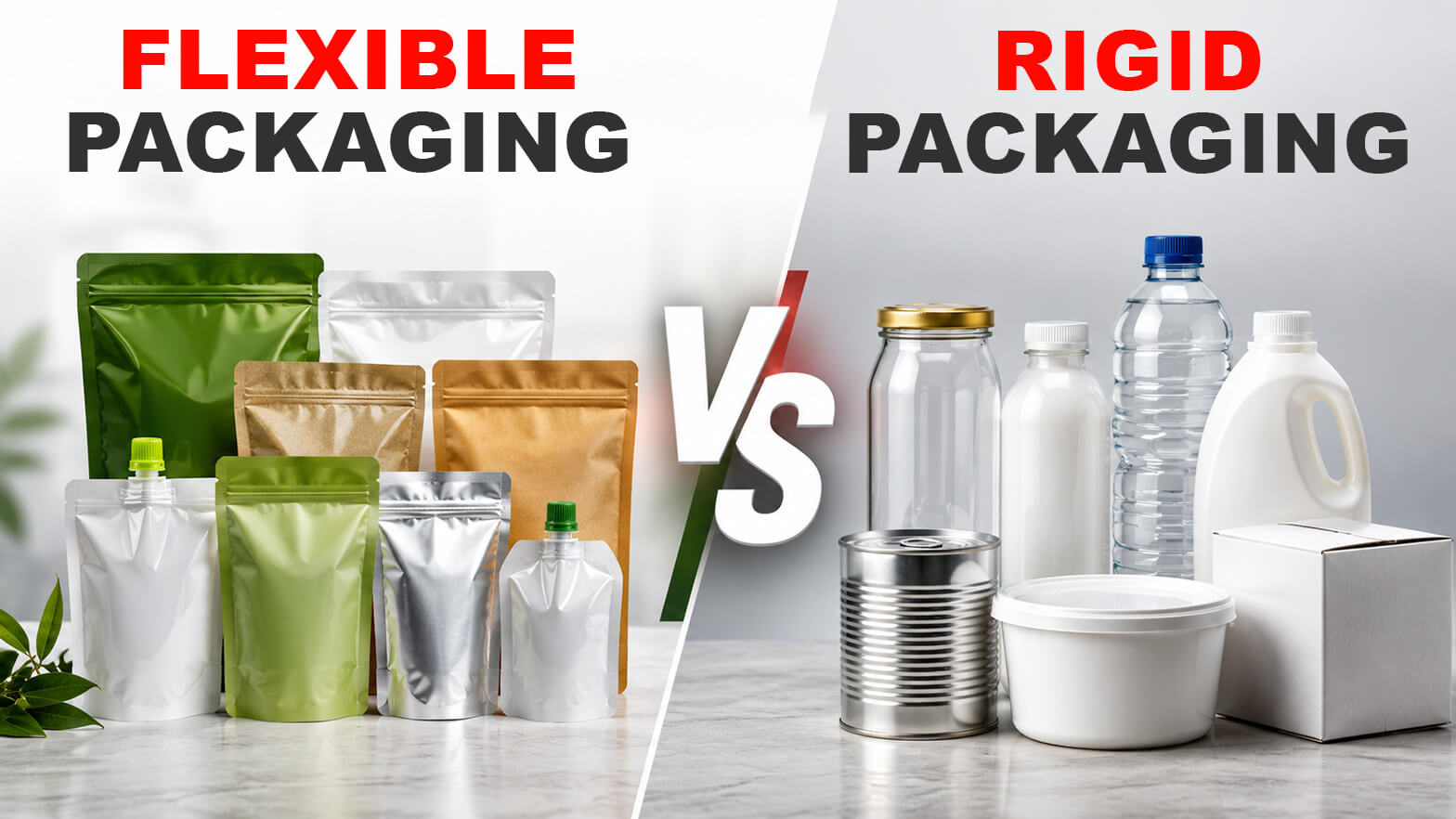
A lot of brands start with rigid packaging because it feels like the safer, more premium choice. Glass jars, tins, hard plastic containers. Then a year in, the freight costs hit, the storage space fills up, and the reorder process gets complicated. So they switch to flexible pouches and wonder why they didn’t do it sooner. This guide helps you make that call before you’ve already committed to the wrong format.
1. The premium myth
There’s a belief that rigid means premium and flexible means cheap. Walk through any supermarket today and you’ll see that’s not how it works anymore. Specialty coffee comes in matte stand-up pouches. High-end supplements come in kraft flat-bottom bags. Luxury skincare brands are launching refill pouches.
Flexible packaging looks premium when it’s designed well. The format doesn’t decide the quality perception. The print, the finish, and the material do.
The best packaging is the one that keeps your product in good condition until the customer opens it. Not the one that looks impressive in a supplier catalogue.
2. When rigid packaging is actually the right answer
Rigid packaging has a real place. There are products and situations where flexible just doesn’t work.
Your product gets damaged in transit
Biscuits, wafers, anything that breaks or crumbles under pressure needs a rigid shell. Flexible film can be strong but it cannot protect against sustained compression the way a carton or tin can.
The container is kept or displayed by the customer
Premium tea tins that sit on kitchen shelves. Artisan jam jars that go on the dining table. If customers keep it, display it, or give it as a gift, the weight and feel of rigid packaging earns its cost.
You want to sell refills
Sell the first unit in a rigid container at a higher price. Sell every refill in a flexible pouch at lower cost to produce and ship. The customer keeps the container. Your margin gets better on every repeat order. This model is growing across coffee, skincare, and supplements.
3. Where flexible packaging wins
For most food, beverage, supplement, pet food, and e-commerce products, flexible packaging is cheaper to produce, cheaper to ship, and performs just as well on shelf life when the film is correctly specified. The difference is bigger than most people expect.
3 to 5x
more units fit on a pallet compared to equivalent rigid containers. That alone cuts your freight cost significantly on every shipment.
15g
is roughly the empty weight of a stand-up pouch. A comparable glass jar weighs 200 to 400g. You are paying to ship that glass on every order you send out.
The barrier performance question is where most people get it wrong. Rigid does not automatically mean better protection. A foil or metallised flexible film delivers oxygen and moisture barrier that matches or beats most rigid plastic containers. For dry and semi-dry products, it is competitive with glass too.
The two numbers you should always ask for
OTR (oxygen transmission rate) should be below 1.0 cc per square metre per day for most shelf-stable foods, and below 0.1 for coffee and supplements. WVTR (water vapour transmission rate) matters for anything moisture sensitive. Ask any supplier for both figures in writing before you commit to a film. If they cannot provide them, that is your answer.
Flexible packaging also handles convenience features better. Zip locks, spouts, tear notches, hang holes. These are standard on a flexible pouch and inexpensive to add. Getting the same functionality on rigid packaging usually means custom tooling and added assembly cost.
4. Choosing the right flexible format
Flexible packaging is not one product. A stand-up pouch and a spout pouch are completely different things. Picking the wrong format costs you just as much as picking the wrong material.

Your product gets damaged in transit
Coffee, tea, protein powder, pet food, spices, snacks. Available in foil, kraft, clear window, and metallised. Zip lock as standard. The most versatile flexible format available.
Flat bottom pouch
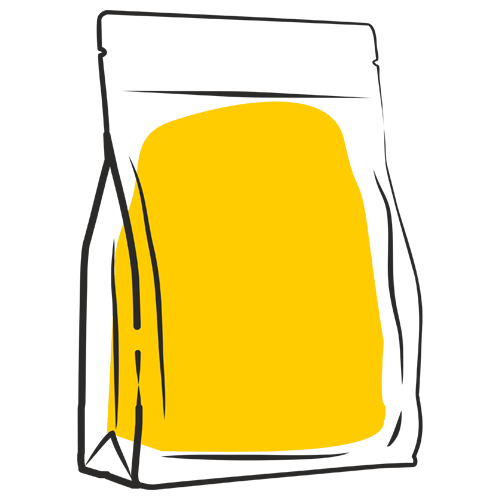
Stands upright on its own with a wide stable base. Looks like a premium rigid container on shelf but weighs almost nothing. Good fit for specialty coffee and supplement brands that care about shelf presence.

Spout pouch
Sauces, beverages, baby food, liquid supplements. Ships flat when empty. A fraction of the weight of glass at the same fill volume. Resealable spout included.

Retort pouch
The flexible replacement for tins and glass in ready meals and wet products. Handles high-temperature sterilisation. Lighter to ship, faster to heat up, easier for the end customer to open.
5. Simple guide: flexible or rigid?
Flexible packaging is not one product. The format, the laminate, and the closure each play a different role. Here is how the main formats map to real product and shelf life needs.
Go flexible when
- Product is dry, powder, liquid, or semi-dry
- Shipping cost and pallet density matter to you
- You need zip lock, spout, or reseal
- Shelf life target is 3 to 24 months
- You are selling online or exporting
- You want full 360 degree print
Stay with rigid when
- Product crushes or breaks under load
- Customers keep or display the container
- Product needs HPP or extreme pressure processing
- The packaging is central to the gift experience
- You are building a refillable container model
Before your next packaging review
Most brands calculate packaging cost as just the material cost per unit. The full picture includes freight weight, pallet density, empty storage space, and fill line speed. When you add all four, flexible almost always wins by more than the raw material saving suggests. Run the real numbers before you decide.
6. How Swisspac can help you make the switch
Whether you are moving from rigid to flexible for the first time or reviewing an existing flexible packaging supplier, here is what Swisspac brings to the conversation.
Spec built around your product
Not a catalogue pick. Every project starts with your product type, shelf life target, and distribution conditions. The laminate OTR, WVTR, and adhesive system are specified for your actual requirements before anything else is discussed.
Every flexible format under one roof
Stand-up pouches, flat bottom bags, spout pouches, retort pouches, woven PP bags, shrink sleeves, coffee valve bags, and more. Stock options for smaller volumes. Custom print from 3g portion packs to 10kg bulk bags.
Print that earns shelf space
Rotogravure, CI flexo, and digital printing with matte, gloss, soft-touch, and metallic finish options. Flexible packaging looks premium when it is designed and printed well. That is a production quality question as much as a design one.
Free samples before you commit
Not sure how a matte foil flat-bottom pouch looks in person? Or whether a kraft stand-up pouch suits your product? Request a sample kit and see the material and print quality before placing any order.
Ready to move away from rigid packaging?
Tell the Swisspac team your product, current packaging format, and what you are trying to fix, whether that is freight cost, shelf life, convenience features, or retail presentation. You will get a clear format and laminate recommendation, no obligation.